Physical Examination in Cerebral Palsy (CP) or Following a Traumatic Brain Injury
Physical Examination
In Cerebral Palsy (CP) or Following a Traumatic Brain Injury
In order to ensure the best orthotic treatment of patients with CP or a traumatic brain injury, a standardised basis for the evaluation of gait is necessary. The Amsterdam Gait Classification enables an indication-specific classification and differentiates between five gait types. It evaluates the knee position and foot contact in mid stance. The patient classification is an essential factor for the physical examination of patients with CP or a traumatic brain injury.
According to the “Concept for the Orthotic Treatment of the Lower Extremity in Cerebral Palsy” we provide an Orthotic Treatment Sheet, which was specifically designed for patients with CP. You will find detailed information about the concept in our CP Guide.
-
Body Weight and Height
-
Step 1/2
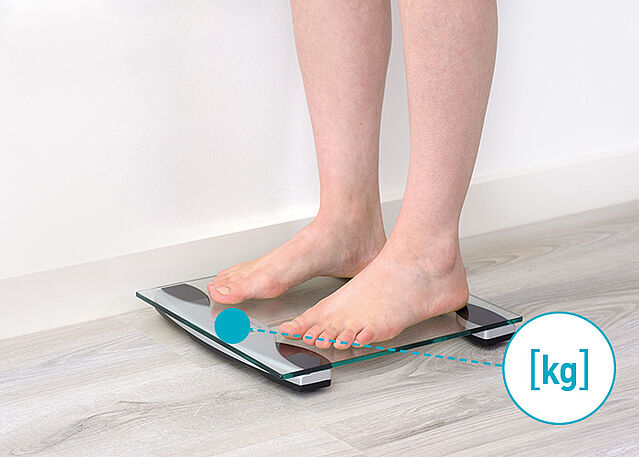
Determine the body weight. Foreseeable changes due to growth should be taken into account.
Step 2/2
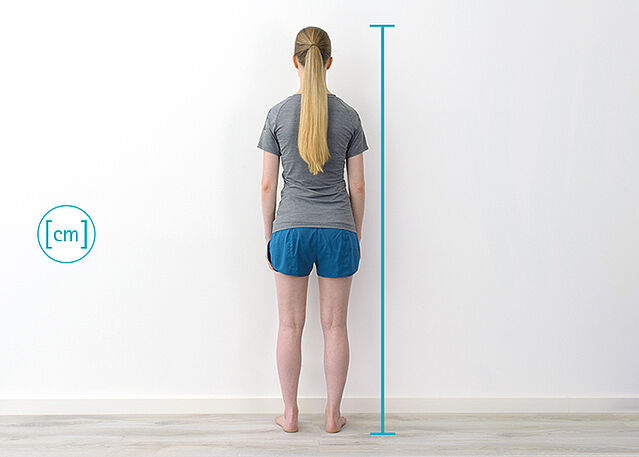
Determine the body height. Foreseeable changes due to growth should be taken into account.
-
Range of Motion in the Upper Ankle Joint
-
Step 1/10
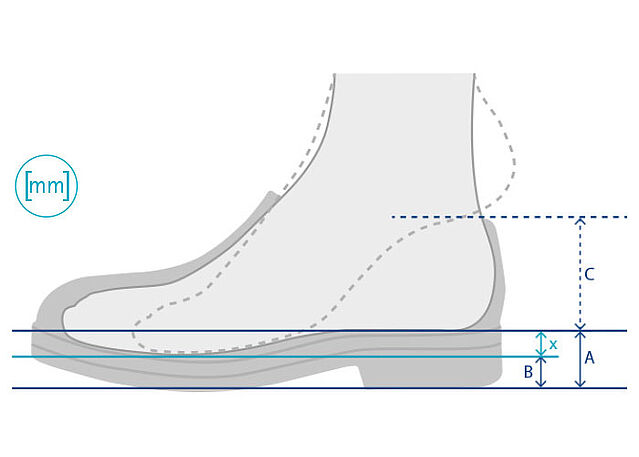
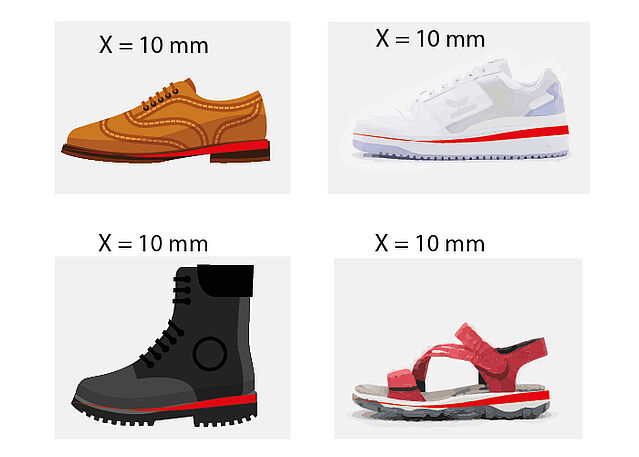
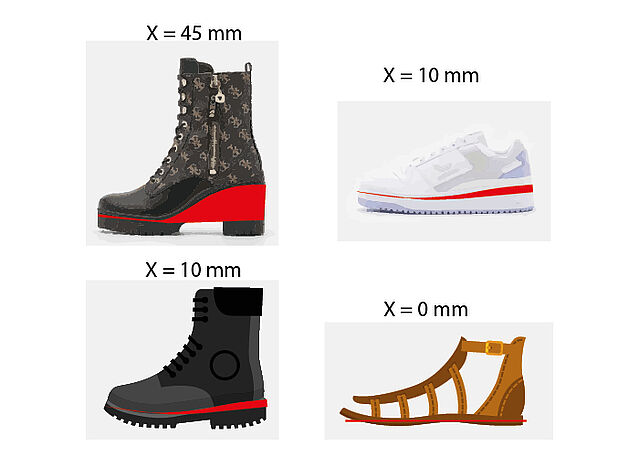
Determine pitch x of the shoe (difference between heel height A and sole thickness B in the ball area). Measure A and B and apply the formula x = A - B. Transfer the determined pitch to the h-Cast.
C is a possible height compensation.Step 2/10
Step 3/10
If the shoe models have a different pitch x, there are two options:
1. The orthosis is equipped with a system joint that can be adjusted to different pitches. This is the case with the NEURO HiSWING system ankle joint.
2. The patient chooses a set pitch.
For Option 1: Determine the maximum and minimum value of pitch x of the different shoe models. Calculate the mean value. This value is needed for making the negative cast. For all other work steps, use the maximum value of pitch x.Step 4/10
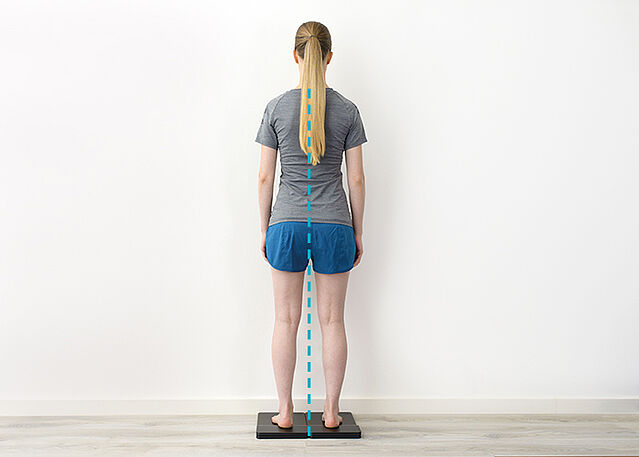
The patient is standing on the h-Cast. Check if the patient stands in a plumb line, e.g. by using a laser plumb bob. The plumb bob should fall from the 7th cervical vertebrae (C7) through the cleft between the buttocks and the middle of the supportive area of both feet. If this is not the case – e.g. due to a unilateral contracture – the patient requires a height height compensation. Determine the height compensation (see C at step 1) and transfer it to the h-Cast. Check the result.
Note: if the patient is unable to stand (even with assistance), determine the height compensation e.g. while lying.Step 5/10
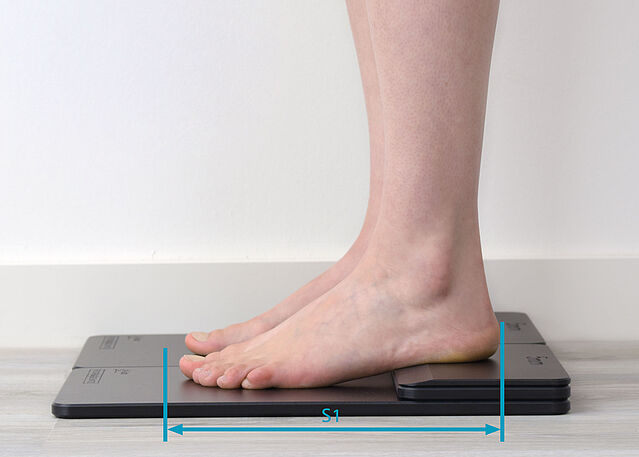
Determine the shoe size (S1) by measuring the foot length and applying the formula (foot length + 1.5 cm) x 1.5. If the feet differ in length, write down the larger shoe size.
Step 6/10
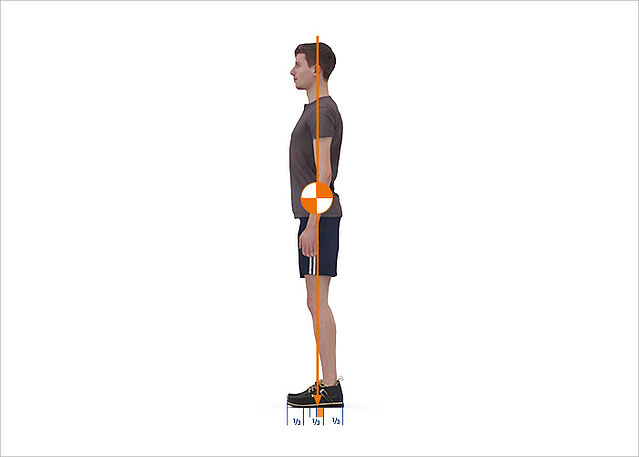
Check the individual normal posture in the sagittal plane with the help of a laser plumb bob. The plumb bob should fall as follows:
- from the body’s centre of gravity,
- across the greater trochanter,
- centrally through the ap measurement at knee height,
- to the rear third of the front half of the supportive area.
With extension deficits, the knee joint does not serve as a reliable point of orientation. If this is the case, approximate the above-mentioned fixed points as closely as possible.
Write down if the plumb line falls through or before the knee’s pivot point.
Note: take the length difference of the feet into account, if present.
Note: if the patient is unable to stand (even with assistance), mark the plumb bob reference area (orange) on a stencil and write down the values.Step 7/10
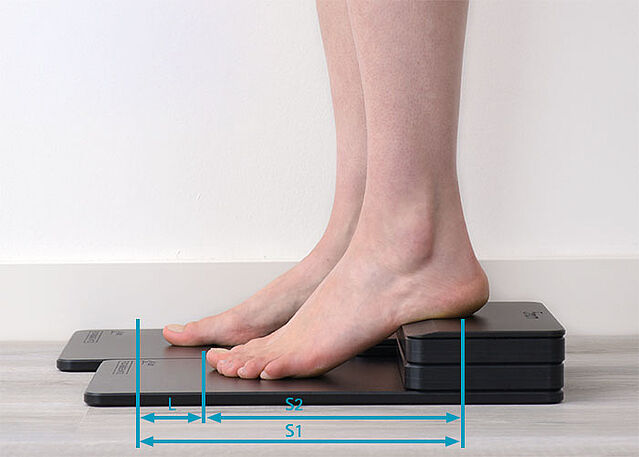
Determine the length difference L. Measure S1 and S2 and apply the formula L = S1 - S2. Write down the length difference L in order to be able to compensate the difference during the following steps.
Important! For a symmetrical stride length, there should be equal leverage ratios on both sides. To achieve that, the rolling-off line’s position and the heel lever must be adjusted in case of a functional shortening (e.g. due to a height compensation).Step 8/10
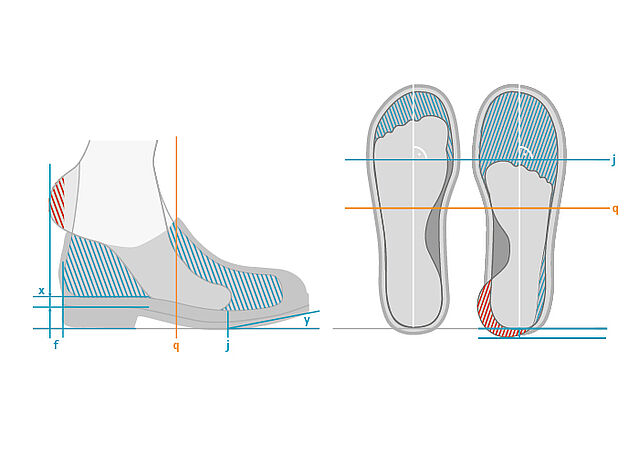
When producing a height compensation, it is essential to create a leverage ratio that is similar to the contralateral side. To do so, the following steps are necessary:
- compensate the volume under the heel and in the forefoot area (blue hatching)
- set the heel back (pink hatching)
- define the mechanical rolling-off line (j)
- consider the heel-to-toe drop (x )
- consider the toe spring (y)
Note: mark the plumb and rolling-off line of the healthy/unaffected foot on the shoe’s insole (or a stencil) and use the values as a guidance for all further steps.
Step 9/10
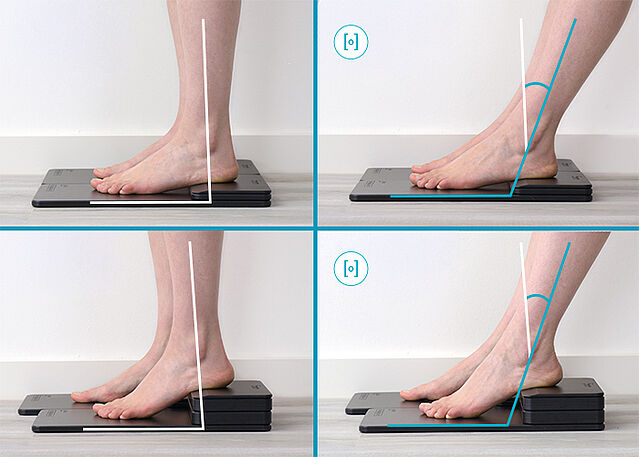
The range of motion in the upper ankle joint in dorsiflexion is measured based on the individual normal posture. Position the patient on the h-Cast, taking into account the leg length/height compensation and the shoe pitch. Measure the range of motion of the upper ankle joint in dorsiflexion based on the individual normal posture.
Note: if the patient is unable to stand (even with assistance), place them on a chair and push their feet back on the h-Cast until the heel lifts from the plate.Step 10/10
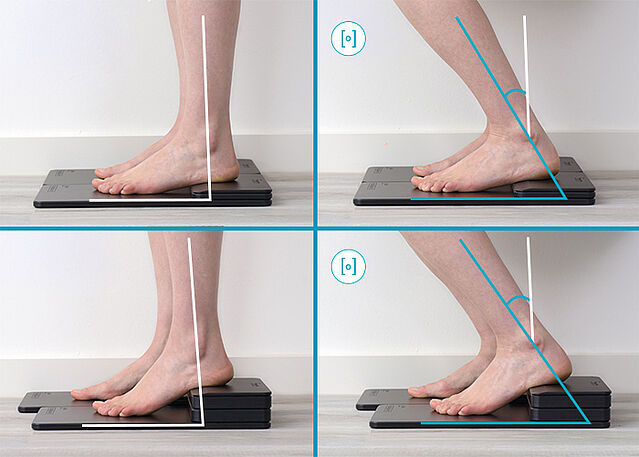
The range of motion in the upper ankle joint in plantar flexion is measured based on the individual normal posture. Position the patient on the h-Cast, taking into account the leg length/height compensation and the shoe pitch. Measure the range of motion of the upper ankle joint in plantar flexion based on the individual normal posture.
Note: if the patient is unable to stand (even with assistance), place them on a chair and push their feet forward on the h-Cast until the forefoot lifts from the plate.
-
Gait Types According to the Amsterdam Gait Classification
-
Step 1/1
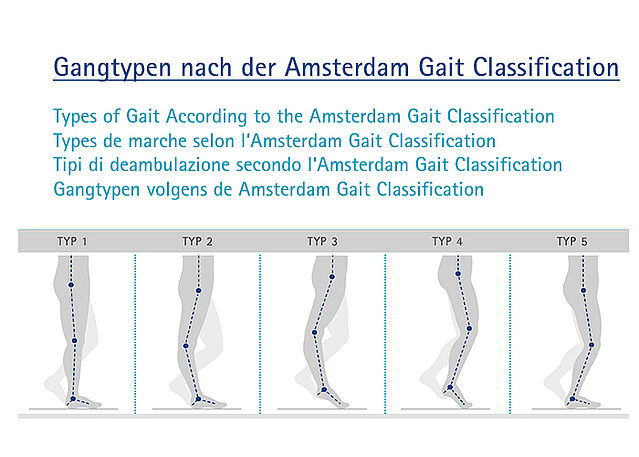
Determine the gait type of the patient according to the Amsterdam Gait Classification.
-
Activity
-
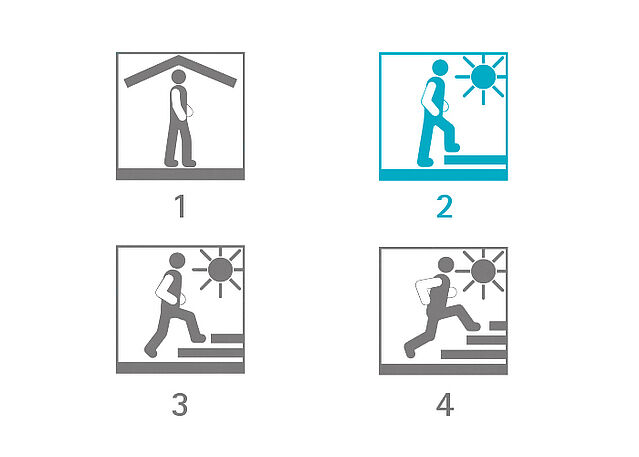
Step 1/5
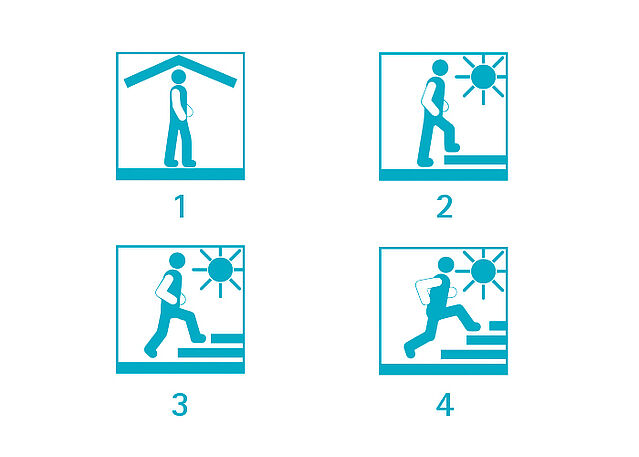
Assess the activity level together with your patient while taking into consideration foreseeable changes.
Step 2/5
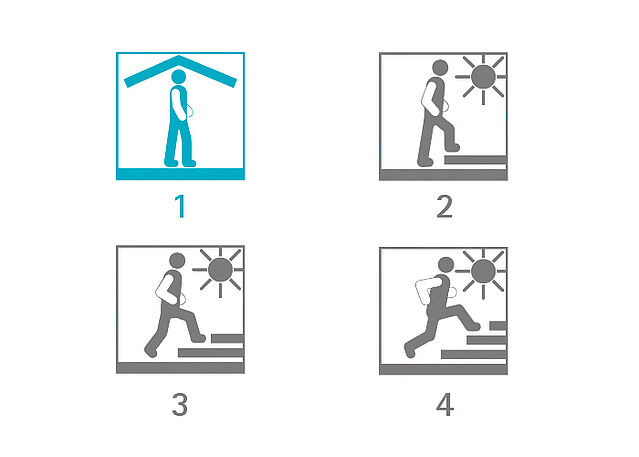
1. Indoor Walker
Activity level 1 of the FIOR & GENTZ classification corresponds to level IV of the GMFCS classification and to level 2 of the FMS classification. Both classification levels are described more detailed in the following.
GMFCS Level IV
Patients can only walk with walking aids. They use a walker without help from another person. For climbing stairs, they have to hold onto a railing and require help from another person. They can only walk with walking aids over long distances.
FMS Level 2
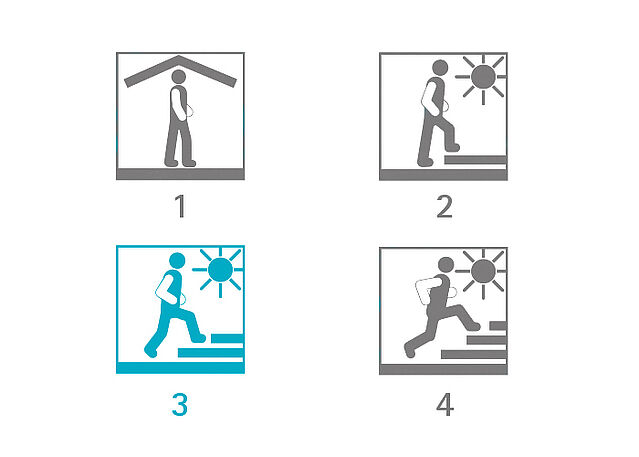
Patients need a walker in addition to an orthosis in order to be able to walk without help from another person.Step 3/5
2. Restricted Outdoor Walker
Activity level 2 of the FIOR & GENTZ classification corresponds to level III of the GMFCS classification and to level 3 of the FMS classification. Both classification levels are described more detailed in the following.
GMFCS Level III
Patients can only walk with walking aids. They use a walker without help from another person. For climbing stairs, they have to hold onto a railing and require help from another person. They can only walk with walking aids over long distances.
FMS Level 3
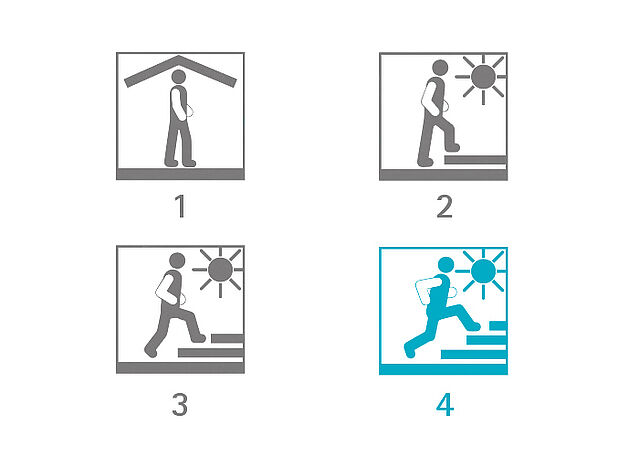
Patients need crutches in addition to an orthosis in order to be able to walk without help from another person.Step 4/5
3. Unrestricted Outdoor Walker
Activity level 3 of the FIOR & GENTZ classification corresponds to level II of the GMFCS classification and to level 5 of the FMS classification. Both classification levels are described more detailed in the following.
GMFCS Level II
Patients can move without any walking aids, most of the time. For climbing stairs, they have to hold onto the railing with one hand. Running, jumping, long distances, uneven terrain and crowded areas trouble the patients.
FMS Level 5
Patients use no devices in addition to an orthosis and do not need any help from another person to be able to walk. For climbing stairs, they have to hold onto the railing with one hand.Step 5/5
4. Unrestricted Outdoor Walker with Especially High Demands
Activity level 4 of the FIOR & GENTZ classification corresponds to level I of the GMFCS classification and to level 6 of the FMS classification. Both classification levels are described more detailed in the following.
GMFCS Level I
Patients do not need any walking aids. Running, jumping as well as climbing stairs without the use of a railing do not pose a problem.
FMS Level 6
Patients use no devices in addition to an orthosis and do not need any help from another person to be able to walk. They can walk on any terrain and in a crowded area.
Last Update: 17 February 2023